Description
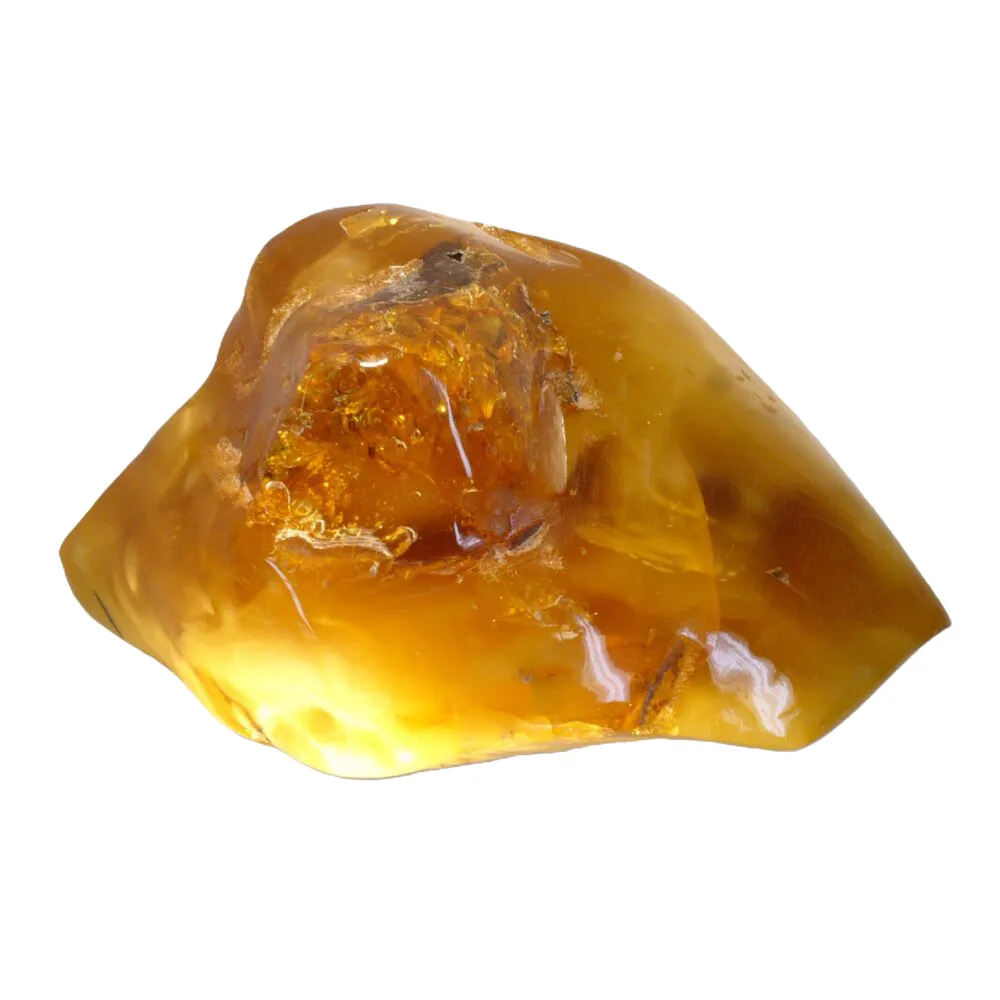
AMBER is fossilized resin. It is often regarded as a mineral, but in fact it is not a mineral species of its own – it is a mixture of many organic compounds. It forms irregular, shapeless masses and pieces. It often contains inclusions, frequently perfectly preserved fossil insects (mosquitoes, flies, ants, centipedes), small animals (lizards) and plant remains. Because of its low density, amber floats on the surface of water, which is how medieval fishermen found it most easily. It is famous for preserving in excellent condition the small animals, mainly arthropods, that got stuck in it while it was still soft. More than 2,600 species have been identified from such animal inclusions so far, and plant inclusions let us draw conclusions about the flora of past geological ages. Ancient trade in amber created the Amber Road between the Baltic and the Mediterranean, which also passed through the western edge of present-day Hungary (Szombathely). Hardness: 2-2.5.
Occurrence
Dominican Republic, Burma, Siberia, Spain, Latvia, Lithuania, Sicily, Lebanon. In Hungary: it was described from the Cretaceous (80-90 million years old) layers around Ajka and named ajkaite.
Uses
It was a popular material even in prehistoric times. Many necklaces, tiny statues and ornaments have been found. It was probably even used as payment. The monumental work of art made of amber was the 18th-century Amber Room in Russia, which disappeared during the Second World War. Today its use is on a smaller scale.