
Description
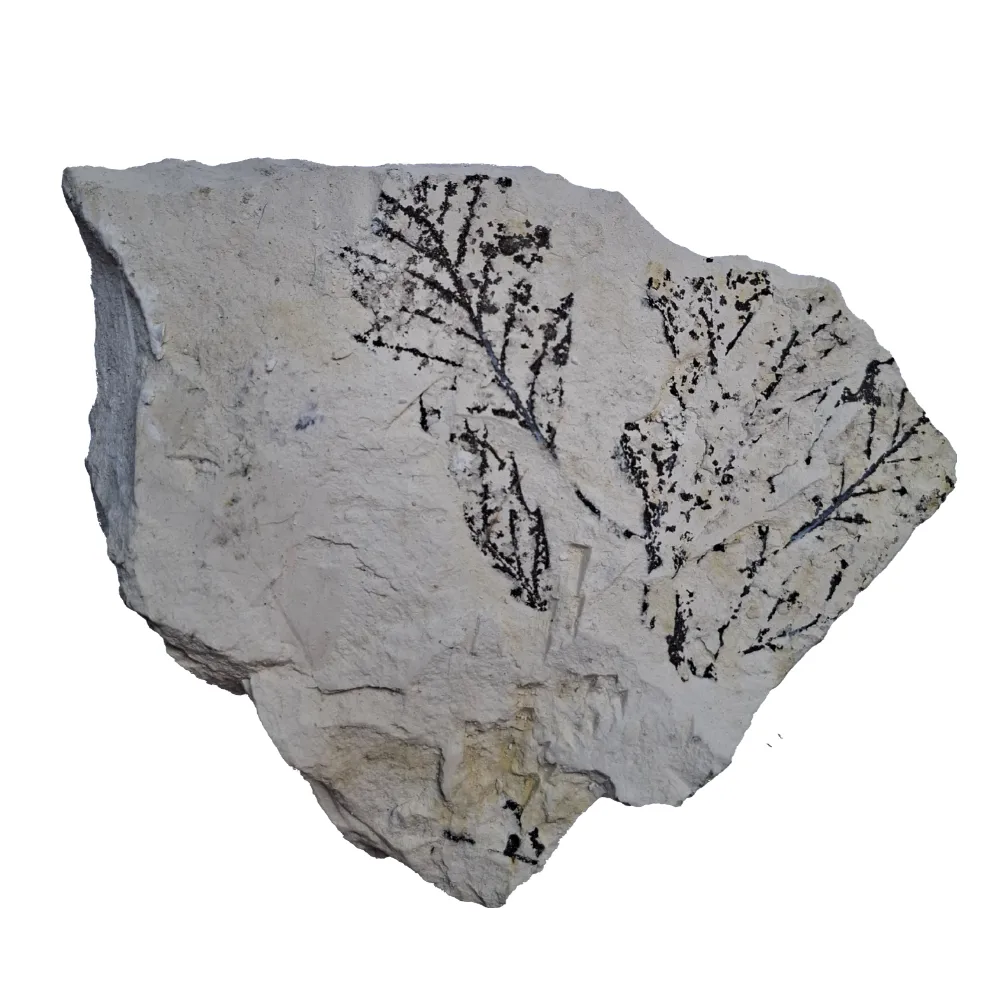
Leaf imprint fossils found in the Zemplén Mountains offer an interesting glimpse into the plant life of the distant past and the environmental conditions of the time. Fallen leaves sank into the sediment of calm lakes or river branches, where mud quickly buried them. During mineralisation and rock formation, the shape, veins and outline of the leaf were sharply preserved. They are most often found in fine-grained sandstone, claystone and tuffaceous sediments.
Importance in Earth history
Based on the shape, size and veins of leaves, palaeobotanists can draw conclusions about the climate of the time. For example, larger, broad leaves point to a humid, warm environment, while smaller ones with toothed edges suggest a cooler, temperate climate. Among the fossil leaves of the Zemplén, there are mainly imprints of relatives of broad-leaved trees (e.g. oak, beech, maple, chestnut), but remains of shrubs and other herbaceous plants are also known. These fossils can be compared with finds from other Carpathian Basin sites, such as the Mátra, the Börzsöny or other sedimentary areas of the Pannonian Basin.