
Description
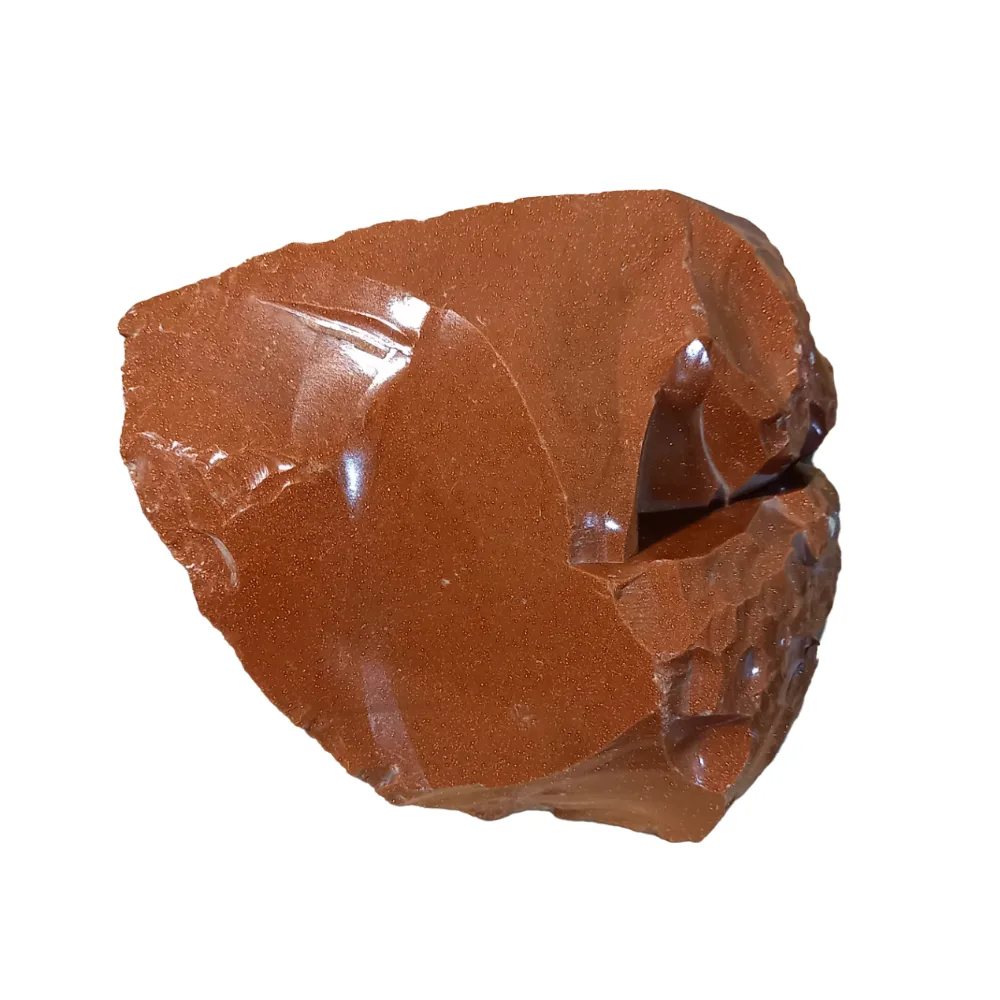
Synthetic sunstone is not actually a natural mineral but an artificially made, glass-like material. It is often confused with real sunstone in the mineralogical sense. The name comes from the Italian word “avventurina” (chance), because according to legend a glassmaker accidentally dropped copper filings into the glass, and that is how the special sparkling effect was discovered.
History
It was probably first made in the 17th century in Venice (Murano), developed by the famous glassmakers. From there it spread across Europe and then worldwide.
Characteristics
-
Material: Coloured glass in which tiny grains of copper or other metal oxides are melted.
-
Appearance: Opaque or translucent, with sparkling, glittering metallic specks inside. Its colour is most often orange-reddish brown, but bluish, greenish and golden varieties also exist.
-
Difference from natural sunstone: The play of light in natural sunstone comes from inclusions in the crystal lattice. In the synthetic version, the sparkle is created by metal particles melted into the glass.
Uses
A popular raw material in the jewellery industry. Ornaments and jewellery are made from it.