Description
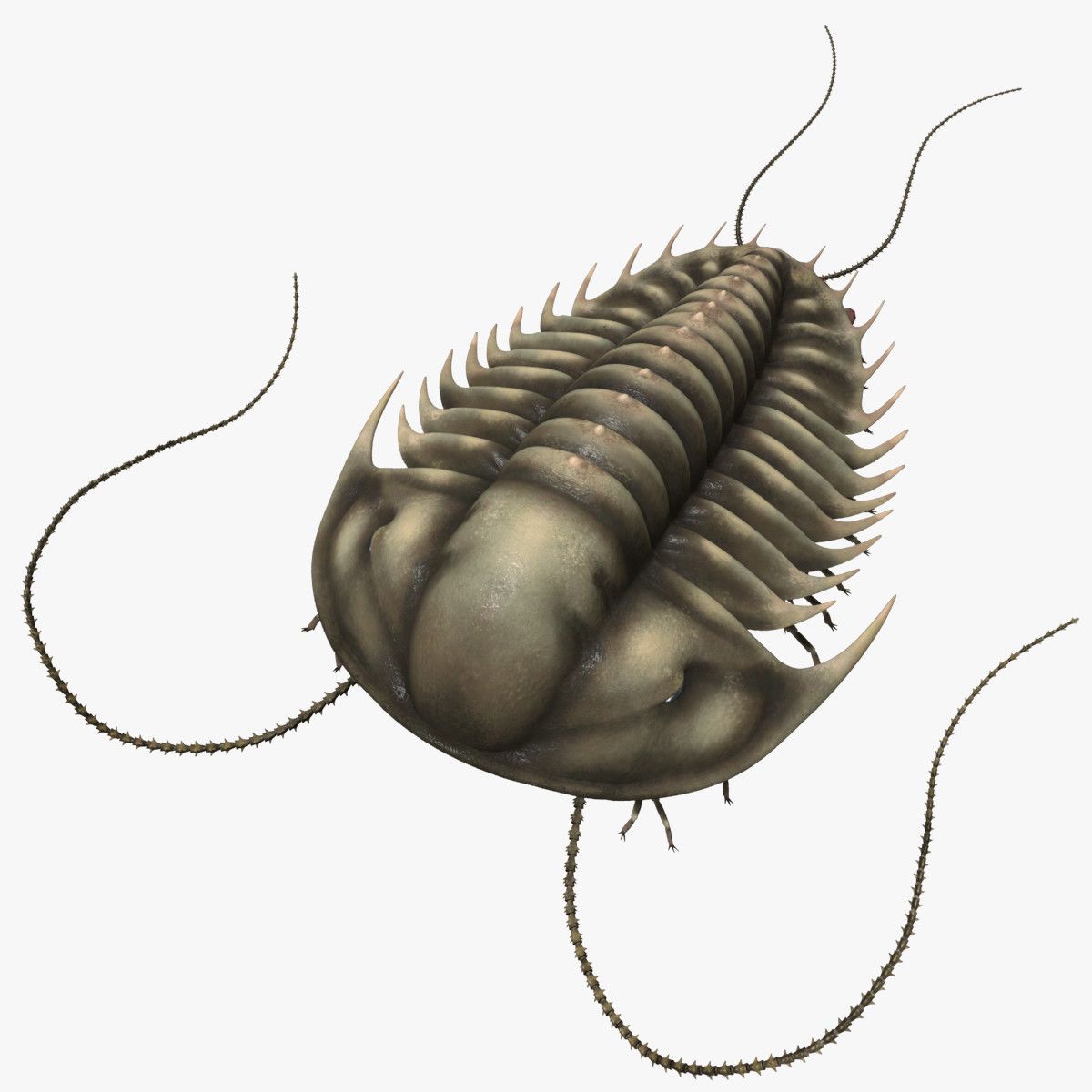
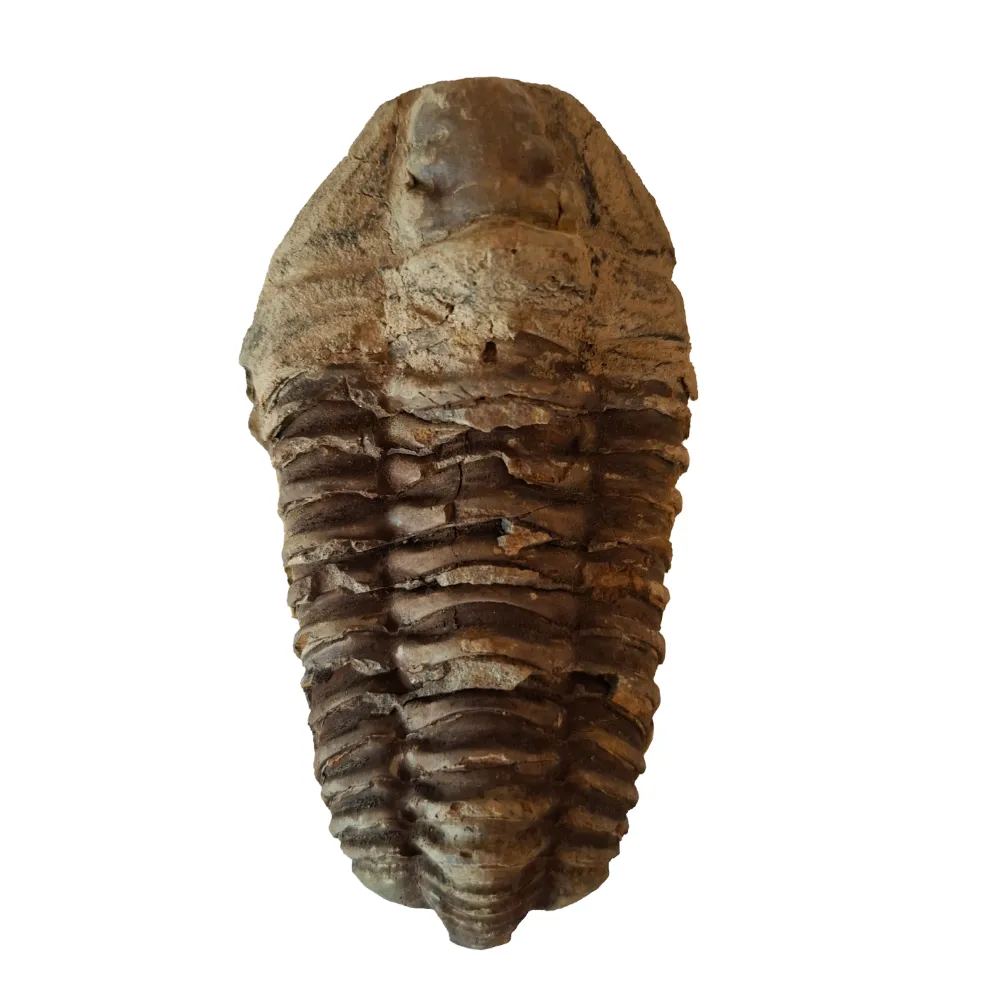
Trilobites are one of the earliest and best-known groups of extinct arthropods (phylum Arthropoda) that lived in ancient seas. They got their name from the three-part division of their body (their dorsal shield is divided into three “lobes”: a central axis and two side parts).
Their size ranged from a few millimetres up to 70 cm (most were 3–10 cm). Their exoskeleton was made of chitin and calcite, so they were preserved very well as fossils. Their body has three main parts: head (cephalon), trunk (thorax), tail shield (pygidium). Many had compound eyes, which are among the oldest developed lens-bearing eyes in Earth's history.
Importance in Earth history
Trilobites appeared in the Cambrian period (about 521 million years ago) and died out at the end of the Permian (about 252 million years ago).
Because of their extremely rapid evolution and diversity, they are excellent index fossils: they help to determine the age of rock layers.
Occurrence
Their fossils can be found worldwide in the sedimentary rocks of former seas. Important localities: North America (Canada, USA), Morocco, the Czech Republic, Russia, China. In Hungary, trilobites have also been found, for example in the Buda Hills and other Palaeozoic rocks, though more rarely.